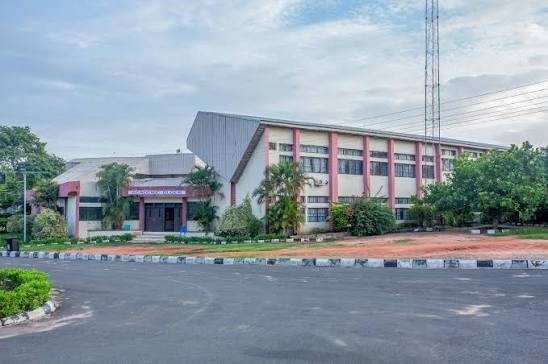
Studying medicine in UMFST-UMCH Hamburg in English inside Germany sounds like a contradiction, since German state universities teach the subject in German and place applicants by school grades. A campus in the Bahrenfeld district of Hamburg offers a different route. The University Medical Campus Hamburg, known as UMCH or UMFST-UMCH, teaches a six-year medicine programme in English and admits students without a minimum grade average. Here is what the published record shows about how it works, what it costs and where the gaps are.
The campus is not a German university. It is a branch of the George Emil Palade University of Medicine, Pharmacy, Science and Technology of Târgu Mureș, a state institution in Romania. According to UMFST’s own account, the Romanian university signed a contract for medical teaching services with Cendag Iberia in April 2018 and opened the Hamburg branch in 2019. UMFST says it alone runs the teaching and academic management, while the buildings, logistics and local relations are handled through Cendag Iberia and its subcontractor, CPE Europe GmbH. The programme was authorised by Romania’s quality agency ARACIS in 2018, and UMFST lists an intake of 200 students per academic year. Students are enrolled in Târgu Mureș, not at a German institution, and the degree they earn is a Romanian one.
The course runs for six years, or 12 semesters, and carries 360 ECTS credits, 60 for each year. Each semester lasts 14 weeks. Teaching starts once a year, at the end of September, and the 2026/27 cohort began on 21 September. The application deadline for this intake was 31 July 2026, though the admissions page says late applicants can write to the team in advance.
The curriculum splits into a pre-clinical and a clinical phase. The first two years cover the scientific groundwork through lectures, lab work and seminars: anatomy, physiology, biochemistry, biophysics, cell biology, genetics and histology, along with medical terminology, ethics and doctor-patient communication. Unlike German public universities, the university says, this phase does not end with a preliminary examination. A short summer internship gives first contact with hospital life. One caution here: the university’s overview page describes the pre-clinical phase as three years in its opening summary but as years one and two in the detailed breakdown. The detailed version matches the third-year description, where clinical placements begin, so this article follows it. Prospective students should confirm the split with the admissions team.
From the third year, students mix campus teaching with placements at partner teaching hospitals, working in small groups of up to ten. Year three adds pathology, pharmacology, pathophysiology and bacteriology alongside first bedside work. Year four moves into specialties such as orthopaedics, cardiology, emergency medicine and radiology. Year five covers areas including gastroenterology, paediatrics, neurology, anaesthesiology and intensive care, and the final year brings gynaecology, family medicine, psychiatry, infectious diseases and a research project. Every student must take at least one elective each year. The degree ends with a written final examination and a research thesis. Hospital places are awarded by preference, but where a hospital is oversubscribed the university ranks students by their first-year grade average, with ties settled by lot.
A small part of the early training happens outside Germany. Three short laboratory modules take place in Târgu Mureș: anatomy in years one and two, and microbiology and pathology labs in year three.
The language of instruction is English for classes. Applicants need English at roughly B2 level, which they can show with a certificate such as IELTS or Cambridge, or through the test held during the selection interview. German matters later. Bedside teaching in partner hospitals is in German or English, and the university expects international students to reach about B2 German by the start of year three. It says free German courses are built into the curriculum, taking students to B2 in the first two years and to C1 afterwards.
Admission does not depend on grades. Applicants need a school-leaving certificate that gives access to university in their home country. The university names the International Baccalaureate, the American High School Diploma and A-Levels among the most common. Students still in their final school year can apply early with a signed form. The application pack includes a personal statement of 250 to 300 words in English, a CV, the diploma or certificate, a passport or ID, a school transcript from grade 9 onward and proof of the €595 application fee. Applicants whose diploma comes from outside the EU, or is not in English, German or Romanian, must check for extra requirements.
The selection itself has two parts. A motivation interview lasts 15 to 20 minutes, and a 90-minute test of 75 multiple-choice questions covers biology, chemistry and general knowledge in equal shares. The two results count 60 to 40 toward the final score. Both can be done by video, so travel to Hamburg is not required, and the university says results arrive within 48 hours. Successful candidates get a place if capacity allows, or a place for the following year.
On age, neither the university’s pages nor the application guidance set a minimum or maximum. The stated requirement is a completed, or nearly completed, secondary qualification, so the intake is in practice school leavers, though the school does not publish an age range. Anyone with a specific concern should ask the admissions office directly.
Fees are where the programme differs most from German public universities. The published tuition is €14,900 per semester for applicants from EU and EEA countries, the United Kingdom and Switzerland, and €17,400 per semester for everyone else. On top of that come a one-time €595 application fee and a one-time €4,500 enrolment fee. There is a cheaper path: from the third year, students can finish in Târgu Mureș at €3,000 per semester. These are the university’s published figures, and the totals below are this article’s own arithmetic, excluding housing, food, insurance and travel. Six years in Hamburg comes to about €183,900 for the first fee group and €213,900 for the second. Two years in Hamburg followed by four in Romania comes to roughly €88,700 and €98,700 respectively. Fees are set by the operator and can change, so check the current tuition page before budgeting. The university also points to a student loan from Hamburger Sparkasse, with a simplified process for amounts up to €100,000. Students may work part time, though the school advises weekends and breaks only.
Recognition is the question most applicants care about. The university says its parent institution is accredited by ARACIS, a full member of the European Association for Quality Assurance in Higher Education, and that the Hamburg programme was accredited by the agency IAAR in 2023. It holds the top H+ rating in anabin, the German database for judging foreign qualifications, and is listed in the World Directory of Medical Schools under FAIMER ID F0000226. According to the school, that listing lets graduates sit the US Medical Licensing Examination.
The route to practising in Germany is not automatic. Graduates apply for a licence (Approbation), and the university states that they must show B2 German generally and C1 in medical language, unless they hold a school diploma from a German-speaking country. Recognition rules for other countries vary, and the university itself advises graduates to check the requirements where they plan to work. Whether a particular authority accepts a particular graduate is a decision for that authority, not the school.
Practical details are easier to pin down. The campus sits at Albert-Einstein-Ring 11-15, 22761 Hamburg, and has its own cafeteria. The university lists housing partners including Uninest, THE FIZZ, Urban Living and the HousingAnywhere platform. Non-EU students need a German student visa, usually backed by a blocked account or equivalent proof of funds and health insurance, and must register their address and apply for a residence permit after arrival. Students who already study at an EU university can also apply to transfer into years two to five for 2026/27. Full details sit on the programme page.
For applicants weighing the options, the trade-off is plain: no grade barrier and English-language teaching in Germany, against a high price and a Romanian degree that needs further steps for German licensing. That is a personal and financial decision, and this article is not financial advice. Read the current curriculum PDF and fee schedule, and get any recognition promise confirmed in writing before paying.